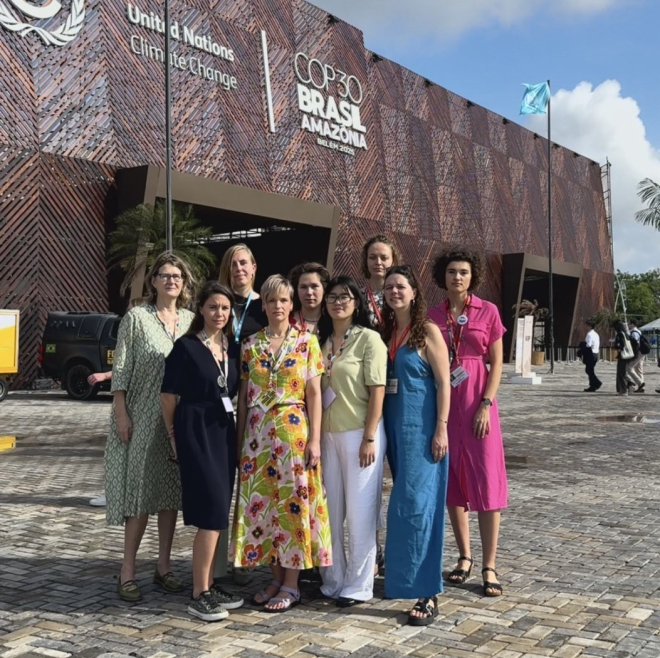
During the climate summit, WO=MEN, together with a broad coalition of members and partners, sent a powerful message from Belém: gender equality is essential for fair and effective climate policy. We did this together with: ActionAid Netherlands, Both ENDS, CARE Netherlands, de Jonge Klimaatbeweging, Mama Cash, Mercy Corps, Milieudefensie, Mondiaal FNV, New Women Connectors, Oxfam Novib, WaterAid, Women Engage for a Common Future (WECF), and their partners from the Global South.
WO=MEN also worked closely with feminists worldwide connected to the Women and Gender Constituency, an official UN body advocating for gender equality within climate action. The day before the summit, we gathered for final preparations (see photo below).
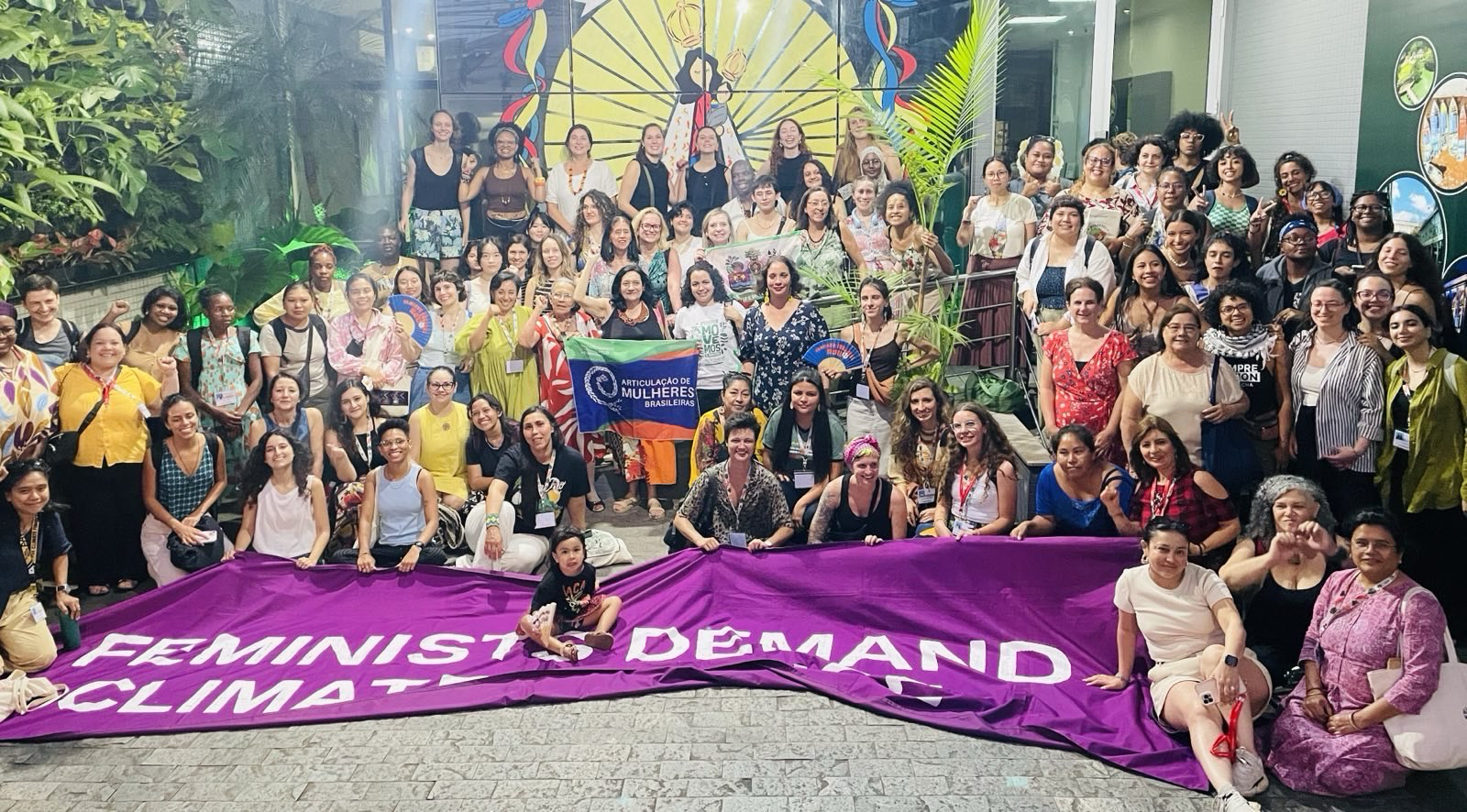
Together with the Women and Gender Constituency in Belém. 9 November 2025.
The summit opened with ambition. On 10 November, 92 member states signed the Global Statement on Gender Equality and Climate Action at COP30. The declaration emphasised that effective and just climate policy is only possible when gender is placed at the centre. The signatories therefore call for gender mainstreaming in all climate measures and for an ambitious, renewed Gender Action Plan.
Why? Because the climate crisis does not affect everyone equally. Women and girls, as well as other marginalised groups such as trans people, young people and Indigenous communities, are disproportionately impacted by the climate crisis, despite contributing the least to it. At the same time, women—particularly in the Global South—play a key role in addressing the climate crisis and protecting biodiversity. They hold valuable knowledge on climate adaptation and are pioneers in crucial sectors such as forestry and agriculture. Women often know their environments best. This expertise is essential for developing sustainable climate solutions.
Read more here.
Representing civil society, WO=MEN amplified this message. On 11 November, WO=MEN co-organised Gender Justice Day, a day dedicated to highlighting the importance of gender equality and rejecting all forms of anti-rights and anti-gender backlash. We called for a revised Gender Action Plan (GAP) with ambition, accountability and transformative outcomes. At the same time, we strengthened solidarity and visibility for feminist leadership—essential for a just and sustainable future.
Gender Justice Day featured many creative actions. In the conference halls, we filled large baskets with letters from women and gender non-conforming people from around the world. The baskets symbolised the heavy, unpaid, often invisible and unrecognised labour that women carry out globally. It is women who carry these heavy baskets daily across long distances, steep hills and marshy terrain to transport essential goods.
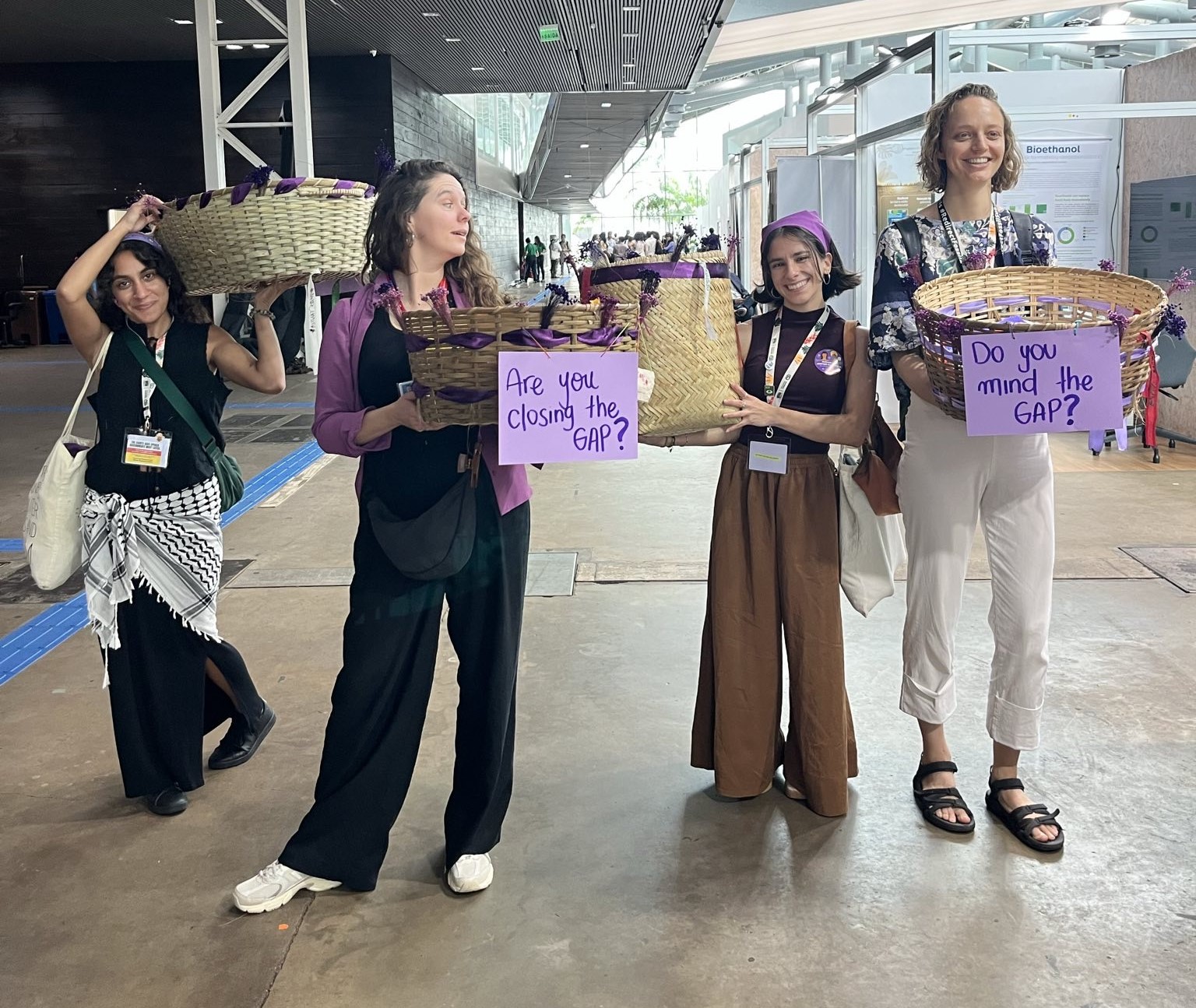
Together with the Women and Gender Constituency, WO=MEN organizes Gender Justice Day. 11 November, Belém.
Despite the overall disappointing outcome of the summit, one important achievement was secured: the adoption of a nine-year Belém Gender Action Plan. This is a key instrument intended to advance gender equality in climate action worldwide in the coming years. The plan is the result of years of feminist advocacy, in which WO=MEN has been actively involved over the past two years. The result? The action plan contains 27 new activities and, for the first time, explicitly recognises the role of women environmental defenders, including a mandate to develop guidelines for their safety and support. Other structurally excluded groups—such as Indigenous, Afro-descendant and rural women—are also named for the first time in the Gender Action Plan. In addition, the themes of care work, violence against women, and the collection of gender- and age-disaggregated data are included in the document.
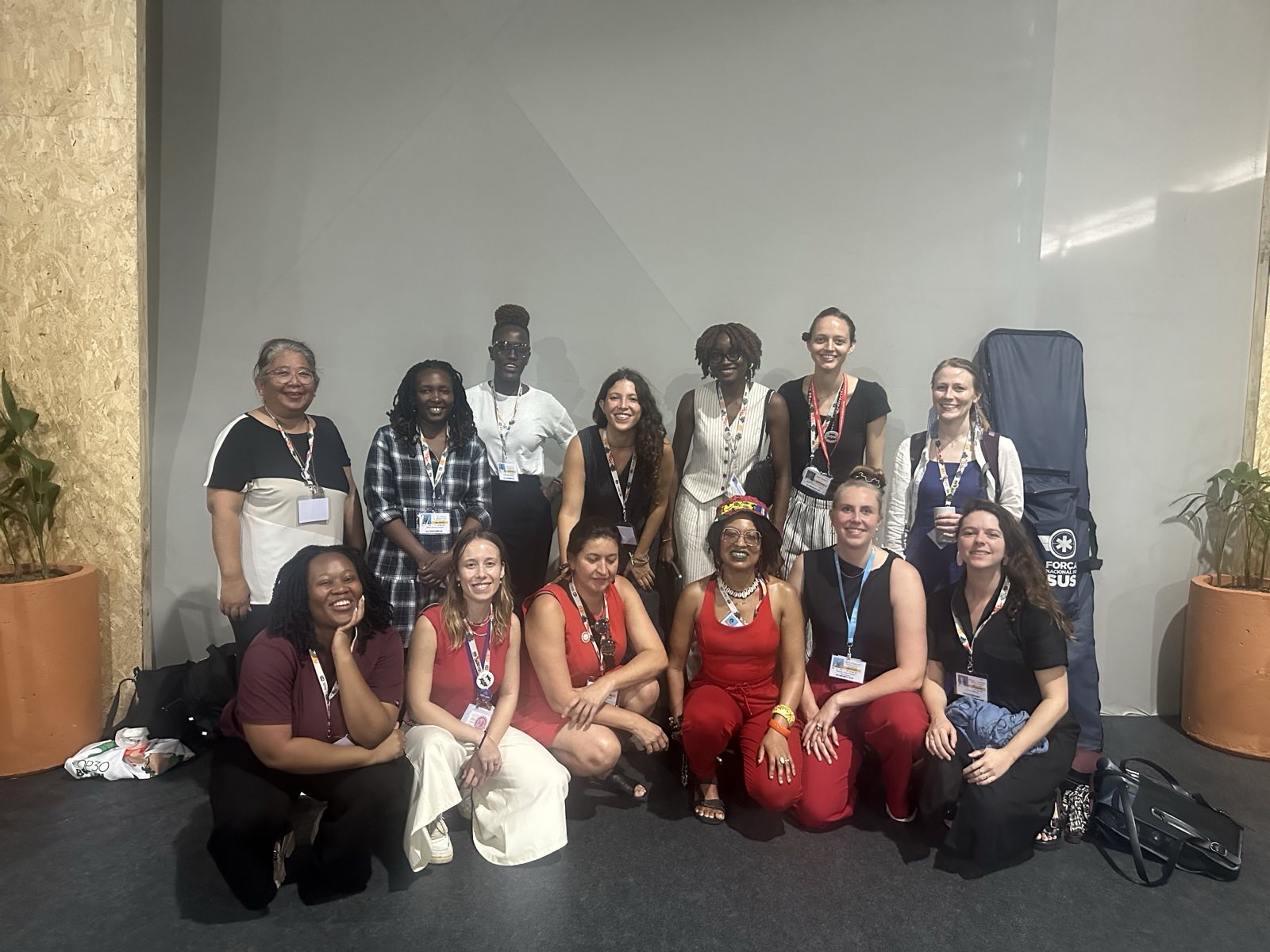
WO=MEN together with the Gender Working Group of the Women and Gender Constituency, including our members WECF and CARE Netherlands, November 2025.
Unfortunately, there were also setbacks, accompanied by strong resistance from several member states seeking to undermine an ambitious, fair and effective GAP. The definition of "gender” came under heavy attack, with the risk of reducing it to simply "men and women”. Thankfully, this did not make it into the final GAP. However, crucial human rights language was removed from the final text. The concept of "intersectionality” was weakened to "multidimensional factors”. The same happened with references to "Sexual and Reproductive Health and Rights” (SRHR), which were reduced to 'health'.
Read our blog on the link between Sexual and Reproductive Health and Rights and climate here.
Finally, the Belém GAP lacks binding indicators to monitor progress and ensure future accountability for implementation by member states. It also lacks the financial resources needed for meaningful implementation. WO=MEN will continue working with its members to push for ambitious implementation of the GAP.
Read more COP30 reflections from our members, including on progress made towards a just transition: ActionAid Netherlands, Both ENDS, CARE Netherlands, Mondiaal FNV, Simavi, and our partner WEDO, with whom we collaborate through the Women and Gender Constituency.
Climate policy can only be fair and effective when women and girls themselves have the space to explain the links between gender equality and climate action. In this spirit, WO=MEN organised a session for members and partners from the Global South on gender and climate with the Dutch UNFCCC delegation, held on-site in Belém.
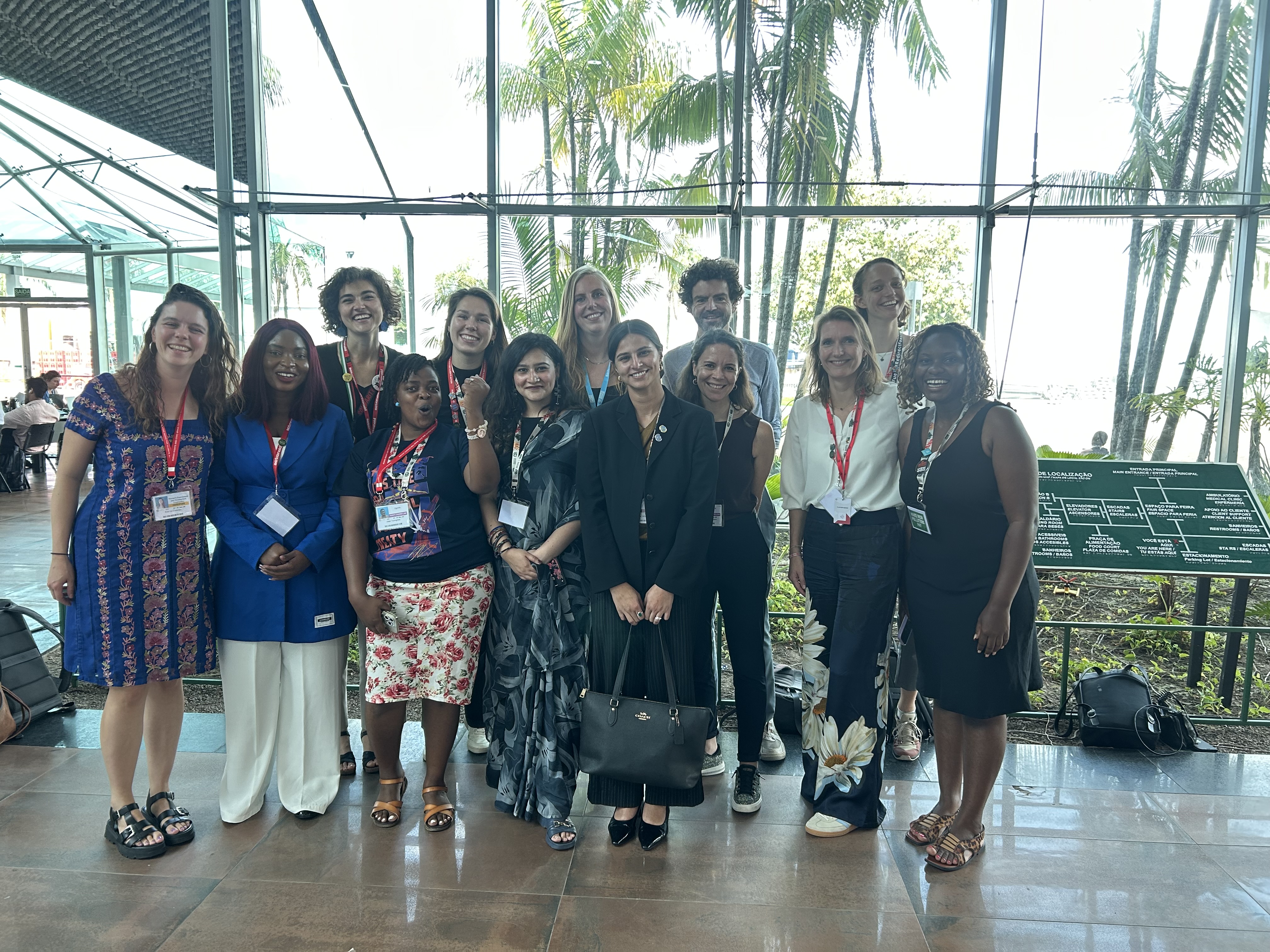
Knowledge exchange with WO=MEN members, partners and part of the Dutch UNFCCC delegation. 18 November in Belém.
Partners from Liberia, Uganda, Pakistan and Malawi clearly demonstrated that gender equality is not a side issue but the foundation of effective climate action. They shared experiences and concrete recommendations. Their insights and knowledge—rooted in the climate initiatives and solutions they lead daily with a focus on gender equality—bridge the gap between their lived realities and the more abstract UN texts. These perspectives are crucial to ensuring that COP outcomes are fair, effective and ambitious.
Finally, unlike the previous climate summit, this year organisations, activists and especially Indigenous groups were able to make their voices heard and organise outside the official summit. Alongside the official COP, a "People’s Summit” was held, resulting in a political declaration. This declaration also emphasises the importance of meaningful participation of women in climate policy and feminist justice. As part of this summit, WO=MEN joined tens of thousands of demonstrators in the protest march through the streets of Belém.
.jpg) WO=MEN present with members and international feminist groups at the People’s March. 15 November in Belém, Brazil.
WO=MEN present with members and international feminist groups at the People’s March. 15 November in Belém, Brazil.