Anti-gender sentiments are gaining ground around the world. Hard-won progress on gender equality, women’s rights and LGBTQIA+ rights are under threat, including in Europe and the Netherlands. Yet awareness of the strategies and impact of the anti-gender movement remains dangerously low.
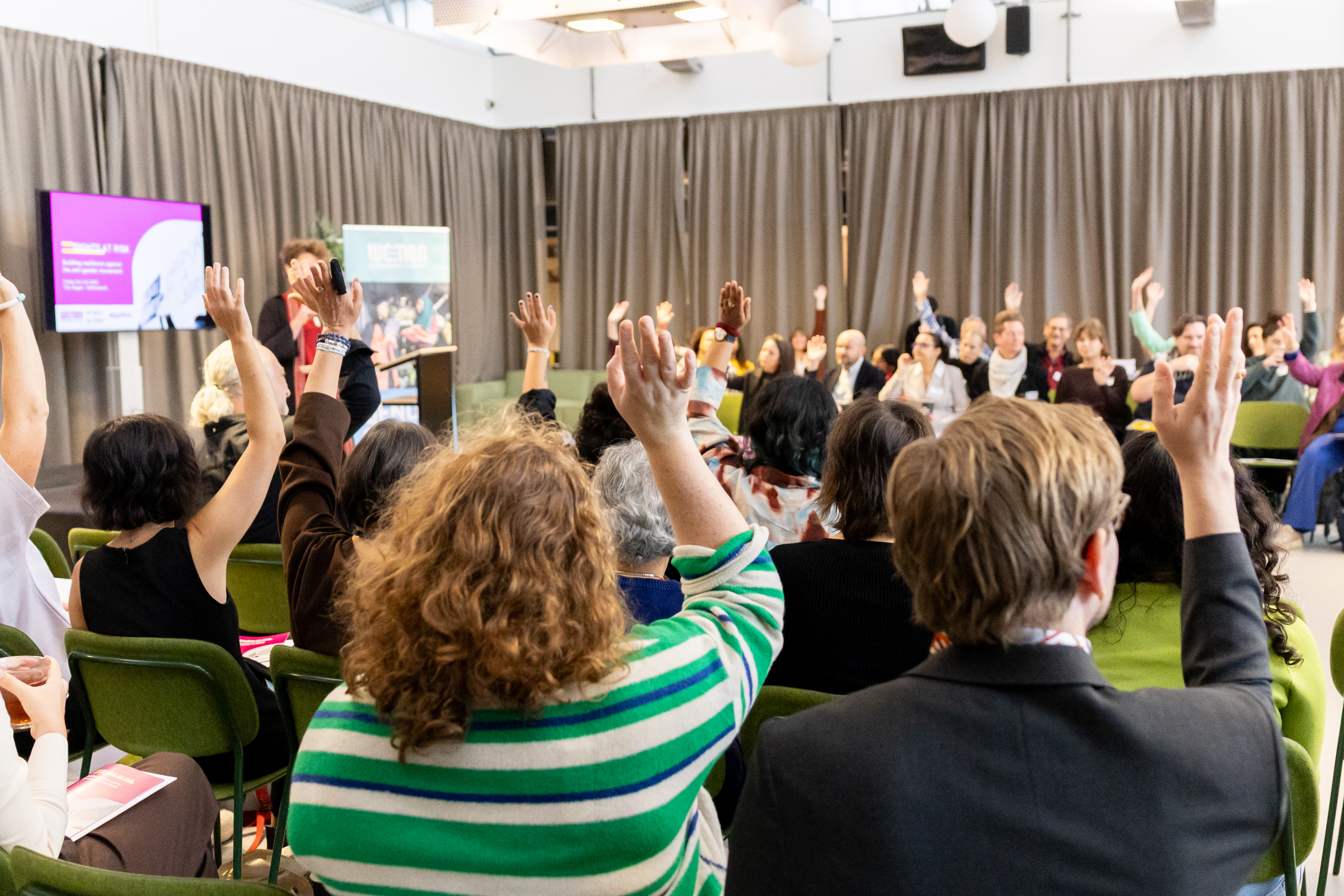
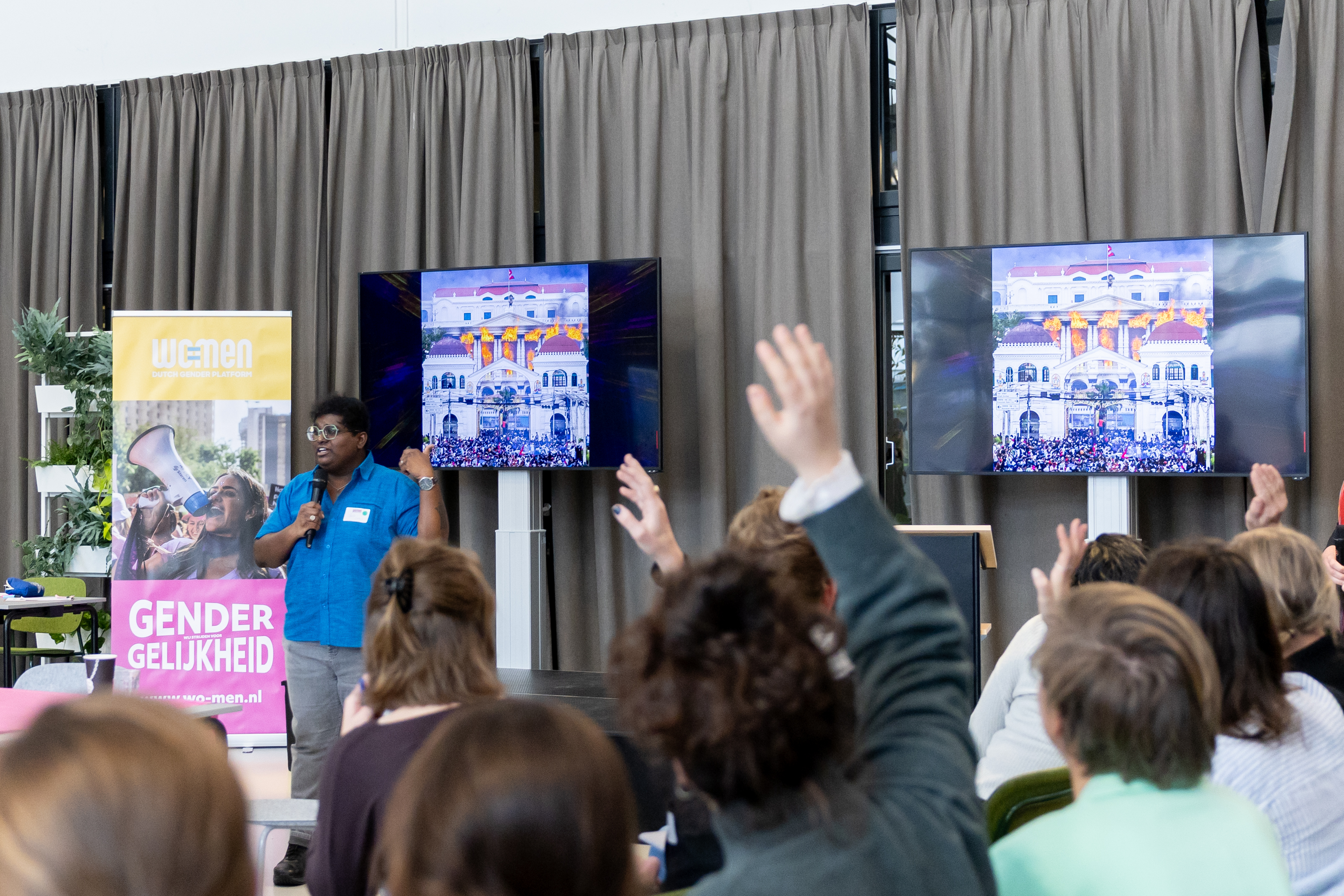
On 3 October 2025, WO=MEN Dutch Gender Platform gathered over 110 policymakers, parliamentarians, researchers, (inter)national experts and civil society representatives in The Hague to learn about the tactics of anti-gender and anti-rights movement, and to build collective strategies and resilience not only to hold the line on gender justice, but to keep pushing it forward.
Strategic, transnational and very well-resourced
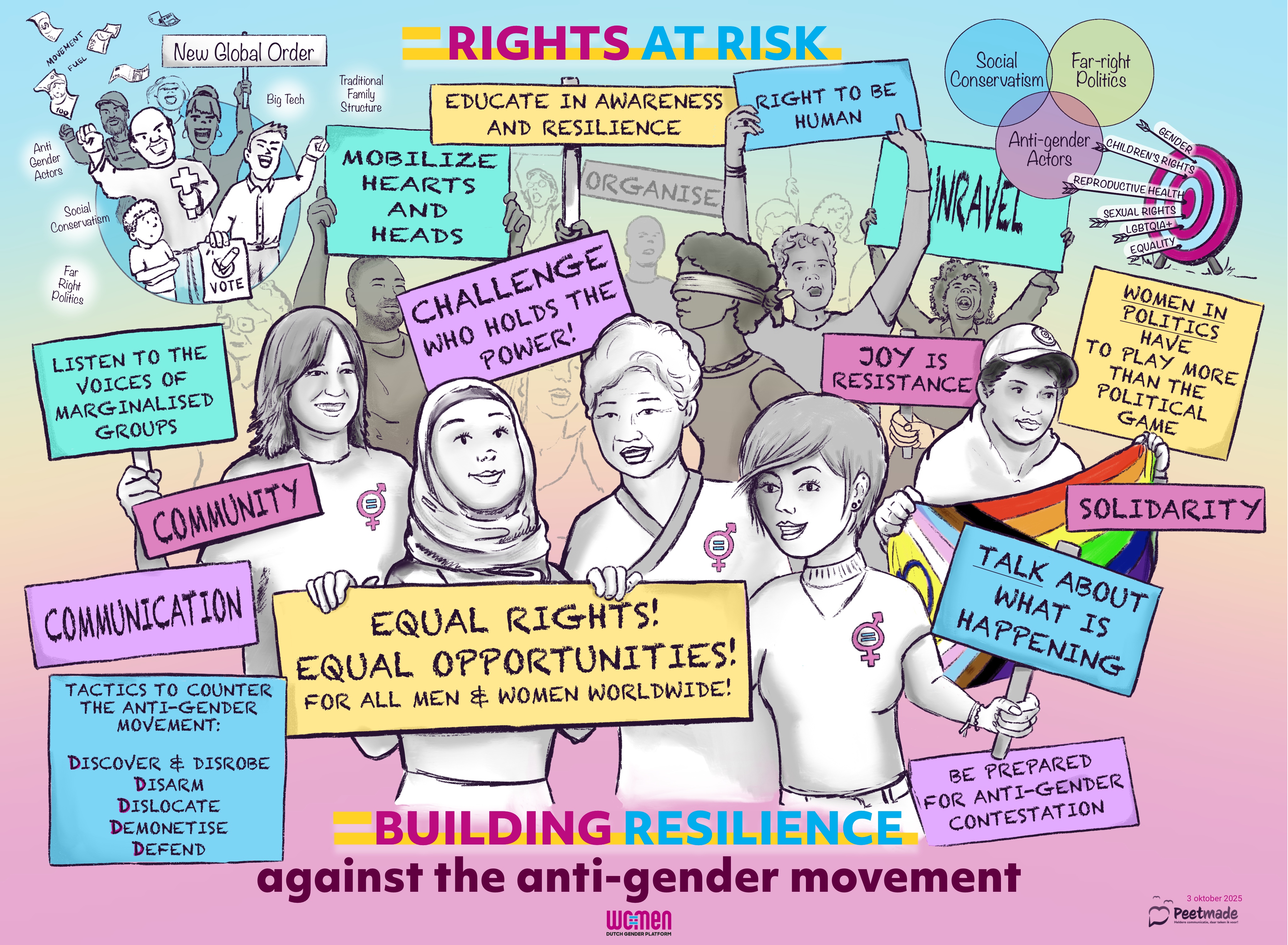
The conference kicked off with a broad examination of the anti-gender movement, the key actors and how it functions. The movement is strategic and very well-resourced. In the past decade, their efforts to attack gender equality, LGBTQIA+ rights, sexual and reproductive health and rights (SRHR), comprehensive sexuality education, and children’s rights among other issues, have intensified. The movement is active transnationally and at multiple levels (local to global), including the United Nations (UN).
Skilled use of language and narratives
The anti-gender movement uses a variety of narratives. These include narratives of pro-family, religious freedom, parental rights, protection of children and defence of women, all to advance an ultra-conservative agenda. The movement co-opts human rights language – as in parental rights and the rights of the unborn child – with claims about innocent children, and the dangers of sexuality education and LGBTQIA+ rights. In the Global South, anti-gender actors are using the language of decolonialism and sovereignty. In this narrative, protection of the traditional family is framed as decolonial and a defence of sovereignty, while the human rights framework, including LGBTQIA+ rights, is framed as imperialist. In some cases, gender equality is being depicted as intrinsic to national values, with immigrants and LGBTQIA+ people constructed as a threat to it.
A political project with its own independent objectives
Participants were urged to diagnose the anti-gender problem accurately. We should not see the anti-gender movement in terms of ‘backlash’, as this suggests they are simply against something. Rather, the movement should be seen as a political project that has its own independent objectives. It involves new actors, including the far right and other opportunistic actors who are leveraging, feeding and harvesting social conservativism to meet their own objectives. Their goal is not to go back in time, but to push forward for a new 21st century world of heteronormativity and patriarchy.
The underlying objectives of the movement depend on the particular actor. Religious actors aim to translate their version of religion into law and reality, if necessary, through authoritarian means. The authoritarians are using anti-gender to solidify power, money and control. The hyper-capitalists (e.g. Big Tech) are using anti-gender to create a world in which government is extremely limited.
Experiences from the United States
Jess O’Connell, a political strategist from the US, explained how the Trump administration has already realised about half of Project 2025, the Heritage Foundation’s blueprint for destroying the current government and creating an anti-gender, anti-rights, far-right government in its place. The administration has banned hundreds of words related to rights and gender, and dismantled many areas of government that are crucial for women. On the cultural side, they are going after funders, philanthropy, teachers and writers, and manoeuvring to control the media. There has also been a rise in political violence, which severely impacts women politicians and elections.
Anti-gender inroads in the Netherlands
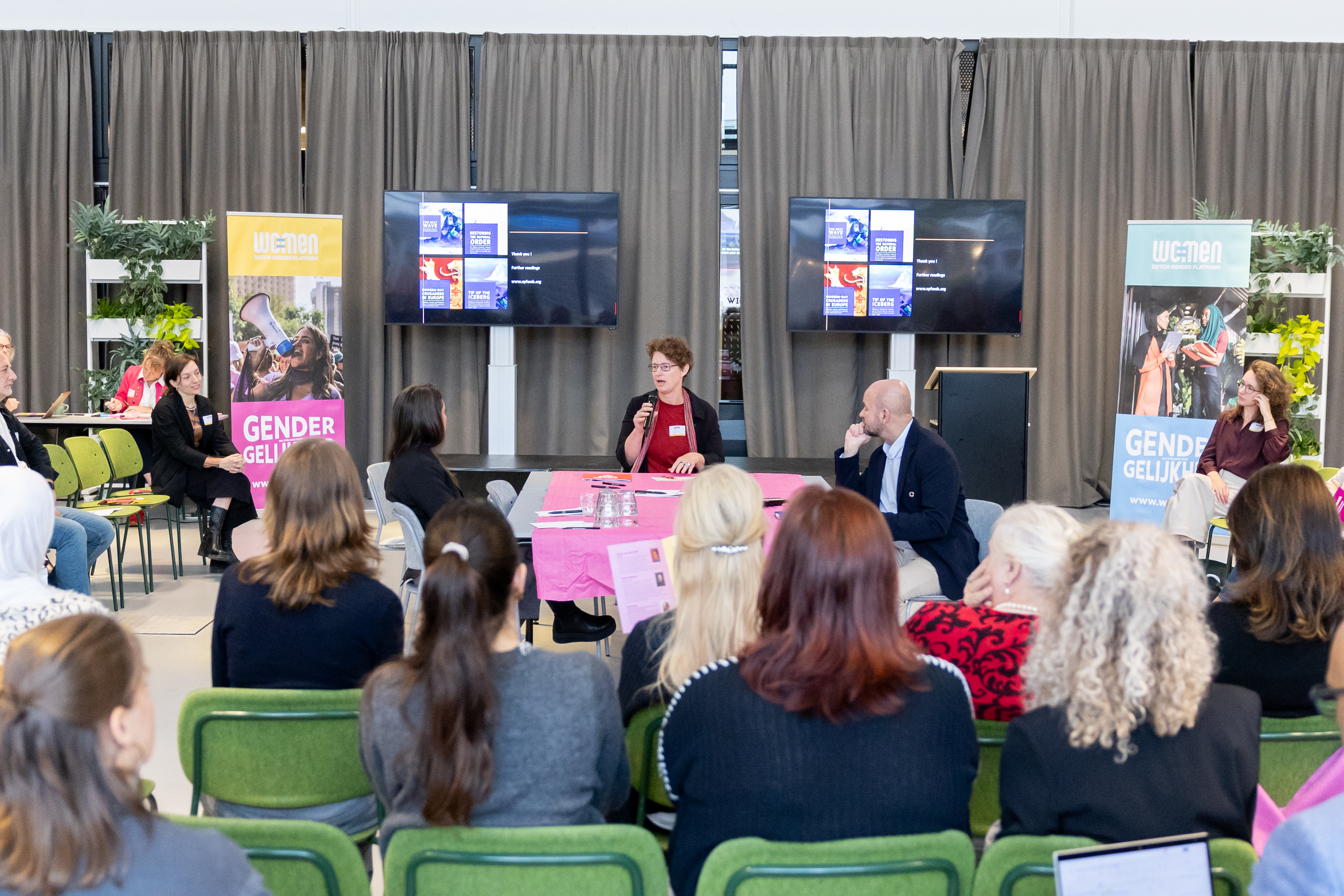
A panel of Dutch politicians reflected on the situation in the Netherlands. A major shift can be seen in changes to the Dutch development cooperation policy: the word ‘gender’ was erased from the policy, as was the government’s commitment to Feminist Foreign Policy. The budget for development cooperation was gutted, and the entire budget for women’s rights and gender equality was cut until Parliament
voted for
its restoration through an accompanying stand-alone budget article. Comprehensive sexuality education in the Netherlands (e.g. De Week van de Lentekriebels) is under attack. Women parliamentarians are being targeted, with fewer women in politics and fewer women voting. Social media has become a space for misogynistic men to connect with each other.
Strategies to build resilience: be prepared, be pro-active
To build resilience and hold the line on gender justice, feminists must be prepared for anti-gender contestation. Pro-active actions to secure better protections, such as the successful action in France to put abortion rights in the French constitution, are vital. The anti-gender movement feasts on (male) loneliness and division. Thus, it is also important to build community, unity and break through prejudice. Community, arts and culture are valuable tools in this regard, as is joy. In some places, feminists are successfully challenging and de-escalating narratives, and finding creative means to defend civic space.
The conference highlighted the importance of reviving old ways of organising, as well as working across movements and resisting the efforts by anti-rights forces to divide us. Building trust and listening to the voices of marginalised communities is key. Solidarity from organisations in the Global North remains crucial in support of feminists in the Global South.